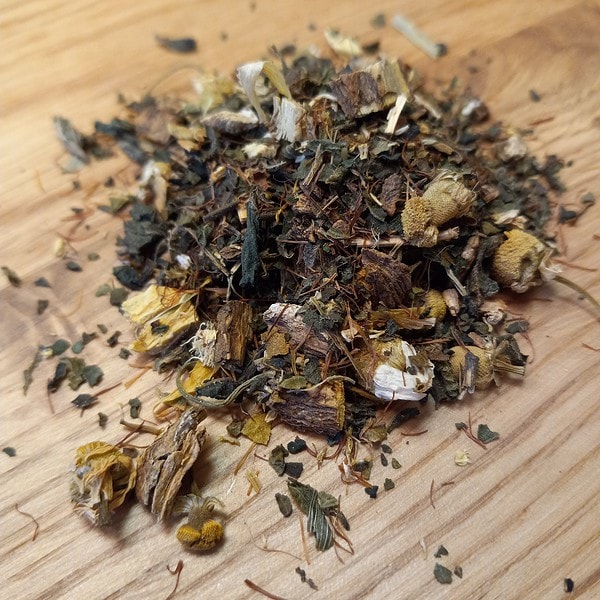
Poor Goldenrod (Solidago spp.). It spends every fall being blamed for hay fever, while Ragweed—the real culprit—hides in the shadows. But if you look past the bad reputation, you’ll find a plant that is an effective tonics for the kidneys and urinary tract.
Traditional Uses
Goldenrod is a premier herb for the urinary system, but it has some other tricks up its sleeve for the skin and joints, too.
- Urinary and Kidney Support: fantastic long-term preventative for those prone to urinary tract or kidney issues. It helps tone the system and flush out debris.
- The Diuretic Action: Because it is a powerful diuretic, it helps the body move fluid. However, use common sense—since it flushes things out, you need to be mindful of your hydration and electrolyte balance.
- Skin and Wounds: Traditionally, it’s used as a “vulnerary” (a wound-healer). It’s excellent for cleaning skin wounds and is quite effective at stopping bleeding when applied topically as a poultice or powder.
- Congestion and Allergies: It’s helpful for drying up the “drip” associated with colds, allergies, and congestion. That said, if you’re dealing with a deep, productive chest cold, I still think Elecampane is better for the job.
- Joint and Heart Health: Its anti-inflammatory properties make it useful for soothing joint pain, and it’s traditionally used to give the cardiovascular system a gentle boost.
- Yeast Infections: Due to its antimicrobial properties, it can also be a help in managing yeast infections.
Important Safety: Use the Right Tool for the Job
Goldenrod is a maintainer and a preventer. It is not the best choice for acute, screaming-pain infections. If things have already gone sideways and you’re in the middle of a sharp, acute UTI, you’ll want something more aggressive. Use Goldenrod to keep the system healthy so you don’t get to that point!
Critical Caution: Toxic Look-Alikes
When you’re out foraging, you must be careful. While Goldenrod is generally safe, it can be confused with Senecio (Groundsel or Ragwort), which contains pyrrolizidine alkaloids that are toxic to the liver.
Always double-check your ID: Goldenrod flowers are usually arranged in dense, plume-like clusters, whereas many toxic look-alikes have more “daisy-like” individual flower heads. If you aren’t 100% sure, don’t pick it!
Growing and Harvesting Notes
Goldenrod is tough, hardy, and a favorite for pollinators.
Growing Conditions: It loves full sun and can handle almost any soil type. It thrives across USDA Hardiness Zones 3 through 9. It can be a bit of a garden-grabber, so give it room to spread!
Harvesting: Harvest the flowering tops just as they are beginning to open in late summer or early fall. This is when the medicinal volatile oils are at their peak.
The Verdict
Goldenrod is a reminder that we shouldn’t believe everything we hear about “weeds.” Instead of blaming it for your itchy eyes, try using it to support your kidneys and flush out your system. It’s a gentle, effective, and beautiful way to keep your internal filters running smoothly.
Join Our Mailing List!
Sign up and be the first to know about specials, promotions and our latest articles on health and wellness.

Cara Schulz
Cara Schulz, a cancer survivor and green tea lover, has opened The Flower Pot, a holistic wellness shop in Burnsville that offers products ranging from medicinal teas and wellness tonics and herbal tinctures.
Browse Our Best Selling Products!