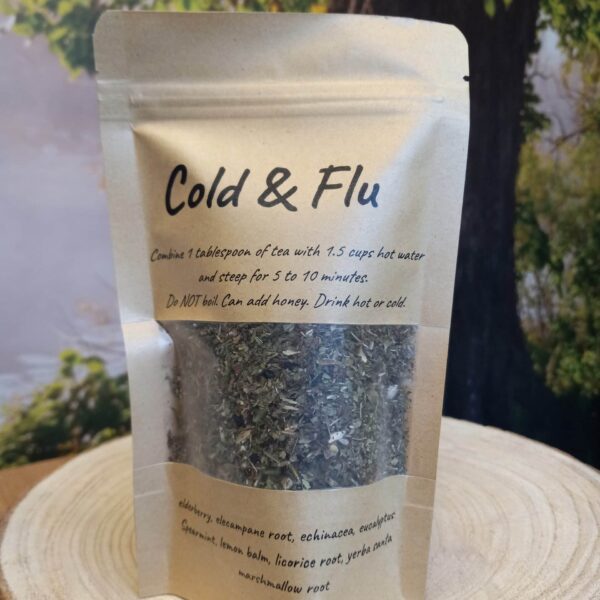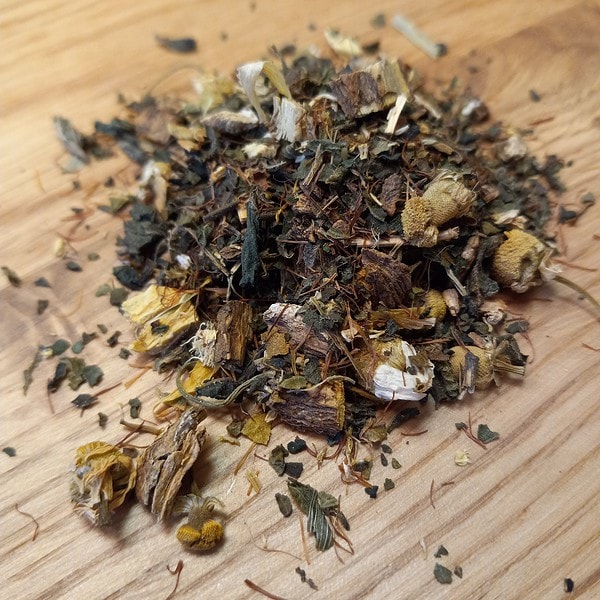
The main ingredient the FDA used to approve for decades for coughs and colds has been widely pulled for not being proven effective. That’s why I rely on Elecampane (Inula helenium). This herb is a powerful, stimulating expectorant and antimicrobial that gets to the root of a cough. It’s an absolute essential, and yes, it’s one of the non-negotiable herbs I include in my Cold & Flu tea.
Traditional Uses: Deep Lung Defense and Drainage
Elecampane is primarily known for the actions of its root, which contains mucilage (soothing) and key compounds like alantolactone (antiseptic and antimicrobial). It is a stimulating herb that moves stuck phlegm and provides deep relief.
- Productive Cough Relief: Elecampane has been used since the time of the ancient Greeks for its ability to treat lung diseases like bronchitis and chronic cough. It acts as an expectorant, helping to loosen thick, stubborn phlegm and promote a productive cough that clears the airways.
- Antimicrobial Action: The herb’s strong antiseptic and antimicrobial properties are particularly beneficial when a bacterial infection is suspected, helping to clear the system of unwanted invaders.
- Gut Health: The root contains a significant amount of inulin (up to 44%!), a prebiotic soluble fiber that supports a healthy gut biome and digestion. Traditional healers also used it as a bitter tonic to help with indigestion, gas, and nausea.
- Topical Use: Historically, it has been used as a poultice for chronic skin conditions, rashes, and minor cuts.
Growing and Harvesting Your Own Elecampane
Elecampane is a striking, tall perennial with large, velvety leaves and beautiful yellow flowers (it’s a member of the daisy family, Asteraceae, like Echinacea).
Growing Conditions: Inula helenium is hardy and prefers full sun to partial shade, thriving in USDA Hardiness Zones 3 through 9. It prefers moist, well-drained soil and needs plenty of room, as it can grow up to six feet tall!
Harvesting: The part with the highest medicinal concentration is the root. It’s best to harvest the large, fleshy root system in the fall, from plants that are at least two to three years old, when the beneficial compounds are most concentrated.
Important Safety Notes
While Elecampane has been safely used for millennia, it is a potent herb and needs to be treated with respect.
Pregnancy and Allergies: This herb should not be used during pregnancy or lactation. Since it is in the Asteraceae family, people with known allergies to related plants (like daisies, ragweed, or yarrow) should exercise caution due to the risk of contact dermatitis or allergic reaction.
Medication Interactions: If you are taking medication for blood sugar, high blood pressure, or any sedative medications, consult your doctor, as Elecampane may interact with these treatments. Also, avoid use for at least two weeks before any scheduled surgery due to potential sedative effects.
The Verdict
Elecampane is the herb you need when a cough isn’t just dry and tickly, but feels deep, stuck, and refuses to move. It’s a firm reminder that plant-based medicine, used with respect and knowledge, offers solutions that often outperform the conventional, unproven remedies found in the store.
Join Our Mailing List!
Sign up and be the first to know about specials, promotions and our latest articles on health and wellness.

Cara Schulz
Cara Schulz, a cancer survivor and green tea lover, has opened The Flower Pot, a holistic wellness shop in Burnsville that offers products ranging from medicinal teas and wellness tonics and herbal tinctures.
Browse Our Best Selling Products!